Cats&Soup : Merge Magic Recipe
- 4.7
- Rating
- 1.00M
- Installs
- Free
- Price

 Analysis by App-foxy
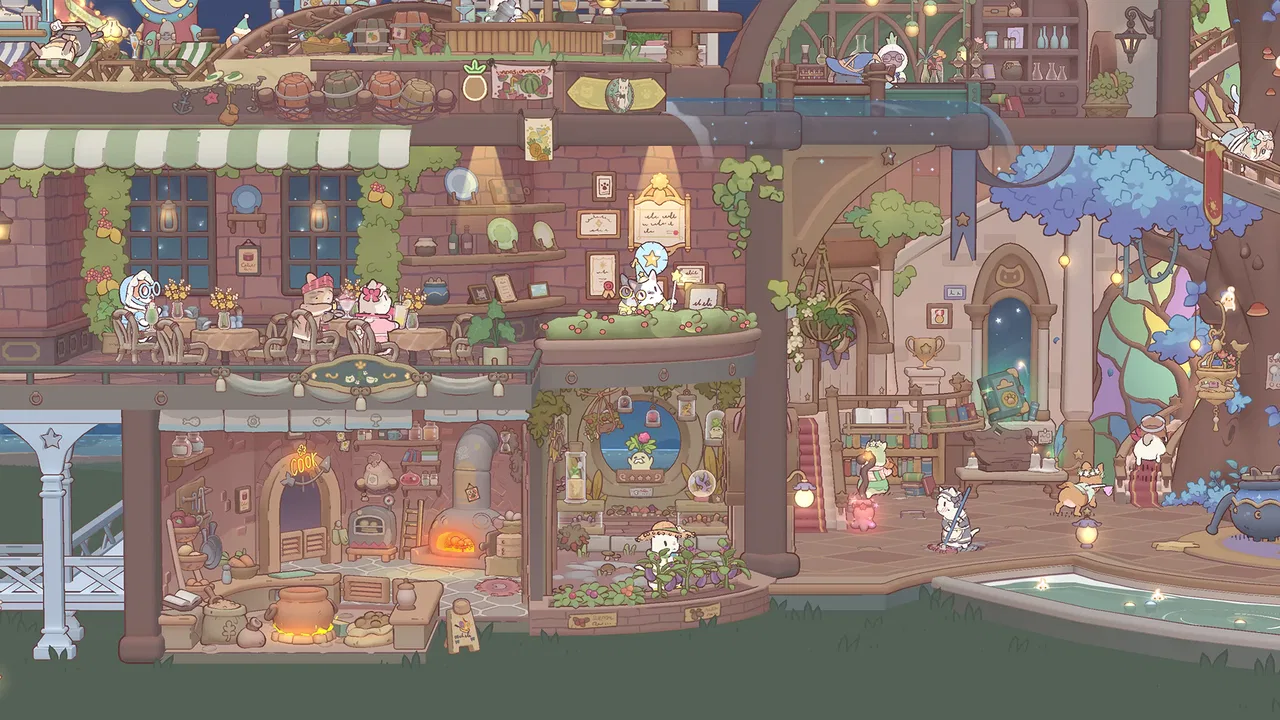
I went into Cats&Soup: Merge Magic Recipe expecting a gentle time-filler, and that is exactly where it works best. This is a casual game from NEOWIZ built around a cozy cat-home theme, with a simple loop of combining items, collecting progress, and gradually making the space feel more personal. It is free to start, rated for Everyone, and easy to understand without a long tutorial or complicated controls.
What makes it appealing is not a dramatic story or demanding challenge. The pleasure comes from small improvements: opening the game for a short break, making a few useful combinations, checking the home, and leaving it in a better state than before. I found that rhythm more important than any single merge. The game is at its strongest when treated as a calm routine rather than a title that needs constant attention.
How the everyday gameplay loop feels
The baseline workflow is pleasantly straightforward. I open the game, look at what is available, decide which pieces are worth combining, and then spend a little time arranging progress around the cat home. The merge mechanic gives each action a clear purpose, while the decorating side provides a visual reason to keep going. Even when I only have a few minutes, there is usually something small I can tidy up or improve.
You May Also Like

 Blood Strike: 2.5 Anniversary
Blood Strike’s Loadouts Turn Every Drop Into a Tactical Gamble
A close look at Blood Strike’s custom loadouts: how fast access to signature weapons reshapes its battle royale rhythm, rewards preparation, and narrows the gap between fights.

 Pandora - Music & Podcasts
Pandora’s Music Is Easy to Start, but Harder to Recover
Pandora’s strength is its low-effort path from a seed to a station. Its weak spot is how much confidence it asks you to place in connection, setup, and quiet recovery.

 8 Ball Pool
 Is Built on Rivalries, Rematches, and Routine
A close look at the rivalries, rematches, shared routines, and unanswered safety questions that turn a quick pool match into a persistent mobile community.

 Samsung Music
’s Quiet Strength Is Playing What You Already Own
Its reach comes less from spectacle than from dependable access to a personal library. That simplicity is both the app’s strongest retention engine and its ceiling.

 AccuWeather: Weather Radar
AccuWeather Review: A Quick, Clear Forecast for Everyday Decisions
For everyday plans, the best forecast is the one you can understand quickly. AccuWeather makes rain timing, radar, and local conditions easy to act on, with a few trade-offs.

 Hill Climb Racing
Why Hill Climb Racing Still Turns Crashes Into One More Run
A tiny car, a bumpy hill and one more upgrade: Hill Climb Racing keeps resurfacing because its simple chaos makes every near-miss feel personal.
More From Our News Desk
View All News


The best use case is a short, interrupted session. It fits the moment when I am waiting for an appointment, winding down before bed, or taking a break between tasks. I do not need to remember a complicated control scheme, and the presentation makes it easy to return after a gap. That makes it more approachable than many puzzle games that punish you for losing track of a long chain of objectives.
There is also a useful separation between action and atmosphere. Combining objects gives the game its practical momentum, while the cat home supplies the relaxing part. If I feel like playing efficiently, I can focus on the board and available combinations. If I want something quieter, I can spend more time looking at the room and choosing how it should feel. That balance is a major reason the game does not become tiring immediately.
Still, the loop is intentionally modest. Players looking for a deep narrative, competitive matches, or a puzzle system that constantly introduces new rules may find it too light. The game does not try to be a strategic epic. Its appeal depends on whether repeated, low-pressure progress sounds satisfying to you.
Why the merge decisions matter more than they first appear
A beginner can combine items as soon as a match seems available, but I got better results by pausing for a moment first. The useful question is not simply “Can these pieces merge?” but “What will this merge make easier afterward?” Combining immediately can clear space, yet it can also leave a less flexible board if the resulting item is awkwardly placed.
My most reliable habit was to scan the whole area before making the first move. I looked for pairs or groups that could create a useful chain, then considered whether a different combination would open more room. This is a small change, but it reduces the feeling of randomly tapping. It also makes the game more relaxing because I am making deliberate choices instead of correcting avoidable clutter.
Another practical habit is to keep the home visually readable. I avoided placing new objects wherever there happened to be an empty spot. A tidy arrangement makes it easier to notice what is available during the next visit, especially when the screen contains several different items. In a game this gentle, organization is not just decoration; it becomes a lightweight memory aid.
Settings and small checks worth making
Before settling into regular play, I recommend checking the device’s sound behavior and the game’s own available options. A cozy game can feel very different with sound effects active during a quiet evening compared with a commute or shared room. I usually decide in advance whether I want the audio atmosphere or a silent session, rather than changing it only after it becomes distracting.
It is also worth checking notification behavior on the phone itself. I prefer not to let a casual game turn into an obligation, so I keep only the alerts that genuinely help me remember to return. If you are sensitive to interruptions, this is one of the first settings decisions to make. The game works perfectly well as something you open voluntarily; it does not need to dominate your day.
Because the game is free with optional purchases, I would also review purchase protections before handing the device to a child. The listed in-app purchase range runs from $0.49 to $99.99 per item, so the difference between a harmless optional purchase and an unpleasant surprise depends heavily on the account and device settings. The Everyone rating makes the game broadly suitable for its content, but age suitability does not replace sensible purchase controls.
I would not change settings constantly while playing. My preference is to create a comfortable baseline: readable brightness, an audio level that suits the room, and notifications that do not pressure me. Once that is done, the game becomes easier to use as a break instead of another source of digital noise.
Repeatable patterns that make sessions smoother
Experienced play here is less about speed than consistency. I found it useful to begin each session with a quick inventory, make the most obvious efficient combination, and only then start decorating or exploring the rest of the home. That order prevents the visual side from distracting me from available progress.
I also recommend grouping similar objects mentally before touching them. Even without a written checklist, this creates a simple priority system: first identify what can combine now, then what might become useful after one move, and finally what is purely decorative. It prevents me from spending the whole session rearranging attractive objects while overlooking an easy advancement.
A second strong pattern is to stop at a natural point. When the available moves become less clear, I do not force a sequence just to keep tapping. I leave the home in an orderly state and return later. That approach is particularly helpful for players who enjoy calm games but dislike the pressure to optimize every action. In my experience, a short thoughtful session is more satisfying than a long unfocused one.
For a realistic everyday example, imagine opening the game during a ten-minute coffee break. I would first check the current layout, combine only the clearest useful pieces, place the result where it remains easy to find, and use the remaining time to make one small decorative change. When the break ends, the game feels complete rather than unfinished. That is the kind of practical rhythm this title supports well.
Another useful approach is to separate “progress visits” from “decorating visits.” On a progress visit, I concentrate on combinations and space. On a decorating visit, I accept that I may not advance as efficiently and simply enjoy the home. Mixing both goals is possible, but separating them helps me avoid judging a relaxing session by the wrong standard.
Where the free-to-play design creates friction
The free entry is a genuine advantage because it lets you understand the game’s tone before spending anything. However, optional purchases can affect how some players experience the pace. If you are naturally tempted to pay whenever progress slows, set a personal rule before playing. I found that the game is more enjoyable when purchases remain a choice rather than a response to impatience.
This is not the right game for someone who wants every action to deliver a major reward. Its charm depends on repetition, gradual improvement, and a willingness to appreciate small visual changes. Players who prefer fast rounds, direct competition, or a clearly defined finish line may be happier with a traditional match puzzle or an arcade game.
Compared with ordinary merge titles, the cat-home presentation gives this one a softer purpose. A more conventional merge game may emphasize resource chains and constant expansion, while this experience puts more weight on the feeling of caring for a pleasant space. Compared with pure decorating games, the merging provides a little more structure and gives each visit something concrete to do. It sits between those two styles rather than replacing either one completely.
The trade-off is that neither side is pushed to an intense level. The merge system is approachable rather than deeply demanding, and the decoration is relaxing rather than a full design simulator. I see that as a strength for casual players, but a limitation for anyone hoping to build elaborate strategies or exercise complete creative control.
Compatibility, audience, and what to expect
The game supports devices running Android 7.0 or later, and the current version is 1.4.0. That makes checking your operating system worthwhile before installing, especially if you are using an older phone or tablet. On a suitable device, the main question is not whether the game is difficult to learn; it is whether its gentle pace matches your expectations.
NEOWIZ has positioned it as a casual experience, and that description fits. The audience is broad: someone new to mobile games can understand the basic actions quickly, while a regular player can develop better habits around space and timing. The Everyone rating also makes it a reasonable shared-device option, provided the account holder handles purchases responsibly.
The game has attracted over 1 million installs and holds a 4.7 average from around 34 thousand ratings, with roughly 1.1 thousand written reviews. Those figures suggest that the cozy merge formula has found a substantial audience, though popularity alone should not decide whether it suits you. I would pay more attention to your preferred rhythm: do you enjoy checking in, making small improvements, and returning later? If yes, the numbers are consistent with what I experienced.
Who should play it and who should skip it
I would recommend it to players who want a low-pressure mobile game with a pleasant visual goal. It is especially suitable if you like decorating but want a little structure, or if merge games appeal to you but you prefer a softer setting than a business, farm, or resource-management theme. It also works well for people who need a game that can be paused mentally as easily as it can be paused on screen.
I would be more cautious recommending it to players who dislike waiting for gradual progress or who quickly lose interest when a game repeats familiar actions. It is also a poor fit for anyone seeking multiplayer interaction, ranked competition, or a story-led adventure. Nothing about the core appeal suggests that it is trying to satisfy those needs.
Parents and gift-givers should remember that “free” means free to begin, not that every optional item costs nothing. I would install it comfortably for the casual content, then check the relevant purchase controls before allowing unsupervised play. That small preparation keeps the experience aligned with its relaxed purpose.
My long-term routine and final judgement
After spending time with the game, my preferred routine is simple: open it when I genuinely want a quiet break, scan before merging, keep the home organized, and stop when the next move feels forced. Those habits make the experience feel intentional without turning it into work. I also keep decorating separate from optimization, because the home looks better when I am not treating every placement as a purely mechanical decision.
The advanced limit is clear: there is only so much depth a deliberately cozy merge game can offer. Better habits improve the flow, but they do not transform it into a complex strategy title. That is why I would judge it by atmosphere and ease rather than by the number of systems it contains. If you want a calm companion for short sessions, that limitation is almost part of the design. If you want constant novelty, it may become apparent quickly.
My verdict is that Cats&Soup: Merge Magic Recipe is best enjoyed as a small daily ritual, not as a game to conquer. Its free starting point, Everyone rating, approachable controls, and cat-home setting make it easy to recommend to the right person. I like that it gives me something to do without demanding full concentration, and I appreciate the way merging and decorating support each other.
I would choose a more competitive puzzle game for challenge, a deeper decorating title for design control, and a story game for emotional investment. But when I want a friendly, unhurried session that leaves a visible sense of progress, this is the one I would suggest to a friend. Its strongest feature is not a flashy mechanic; it is the repeatable feeling that a few calm minutes can make the little home a bit nicer.
FAQs for Cats&Soup : Merge Magic Recipe
01What is Cats&Soup: Merge Magic Recipe?
Cats&Soup: Merge Magic Recipe is a relaxing mobile game that combines cute cats, idle progression, merging mechanics, and simple cooking activities. You collect adorable feline characters, help them prepare recipes, and merge or upgrade items to improve your cooking area. The game is designed for casual play, with gentle animations, soothing sounds, and progress that can continue even when you are not actively playing.
02How does the merging system work in Cats&Soup: Merge Magic Recipe?
The main gameplay revolves around combining matching objects to create upgraded items and unlock new content. As you merge ingredients, tools, or related game elements, you can improve your facilities and support your cats in preparing better recipes. The system is easy to understand, although progress can become slower later in the game and may require patience, repeated play, or careful use of available resources.
03Can Cats&Soup: Merge Magic Recipe be played offline?
Many of the basic activities can usually be enjoyed without a constant internet connection, especially when you are simply managing your cooking area or collecting available rewards. However, some features may require internet access, including advertisements, cloud-related functions, updates, special events, and in-app purchases. For the most complete experience, it is recommended to connect occasionally and use the latest official version.
04Is Cats&Soup: Merge Magic Recipe free to download and play?
The game is generally free to download, allowing players to begin collecting cats, merging items, and preparing recipes without paying upfront. It may include optional in-app purchases for currencies, boosters, decorations, or convenience features. Advertisements can also appear during play, sometimes offering rewards in exchange for watching them. Spending is not always necessary, but it can accelerate progress for players who prefer faster upgrades.
05Is Cats&Soup: Merge Magic Recipe suitable for children and casual players?
The game is well suited to casual players because its controls are simple, the pace is generally relaxed, and the cute cat presentation makes it approachable for a wide audience. Parents should still review the app’s age rating, advertising settings, and purchase options before allowing children to play. Since optional purchases and rewarded advertisements may be available, device-level parental controls are recommended for younger users.
Pros
- Relaxing gameplay that is easy to enjoy in short sessions.
- Cute cat animations and charming visual details.
- Merge mechanics are simple to learn for new players.
- Recipe progression gives each session a clear objective.
- Works well for players who prefer casual
- low-pressure games.
Cons
- Progress can feel slow without spending premium currency.
- Repeated merging may become monotonous over time.
- Some rewards and features require watching frequent ads.
- Limited interaction may disappoint players seeking deeper gameplay.
- Device performance can suffer during busy visual scenes.

Cats&Soup : Merge Magic Recipe
Gallery